
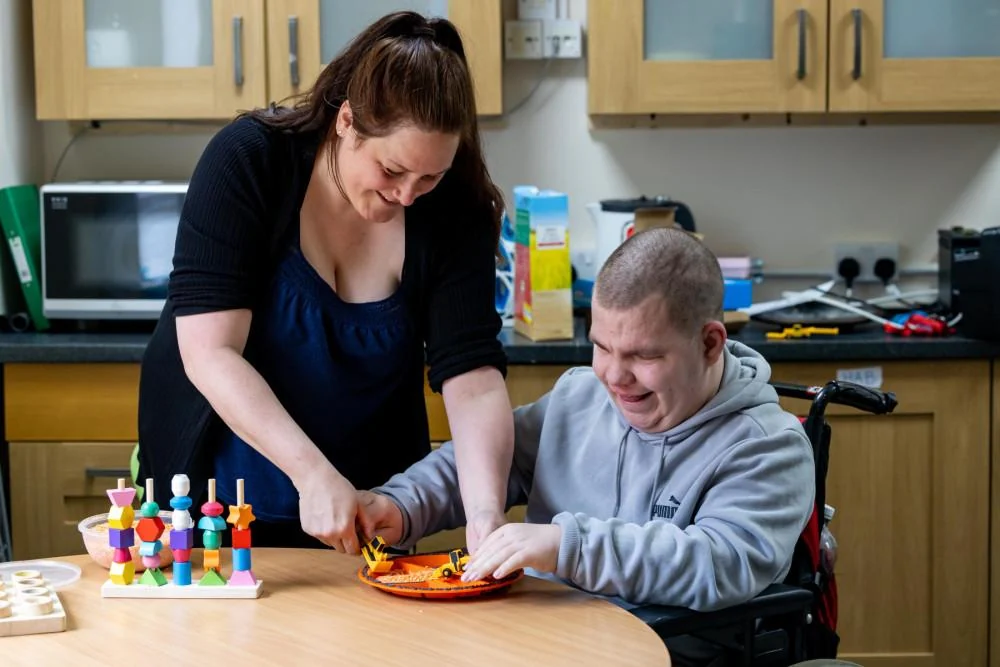
The role of Developmental Services Worker (DSW) is one of the most meaningful — and most misunderstood — careers in Ontario's social services sector. It is a job that demands genuine empathy, practical skill, and adaptability. It is also a job that, according to the people who do it, is unlike anything else they have tried.
We sat down with three members of the SFCS team to find out what a typical day actually looks like — and what they wish they had known before they started.
Who Is a Developmental Services Worker?
A DSW is a frontline professional who supports adults with intellectual and developmental disabilities to live meaningful, self-directed lives. Depending on the setting, this might mean supporting someone in a group home, accompanying an individual to community programs, helping a person practice daily living skills, or implementing a behaviour support plan developed by a clinical team.
DSWs work in a variety of settings across Ontario: group homes, supported independent living apartments, day programs, community participation supports, respite programs, and one-on-one community support arrangements. The work is intensely relational — the quality of the relationship between a DSW and the person they support is often the most important factor in the quality of outcomes.
Morning: Starting the Shift
For Marcus, who works in community support with SFCS, mornings start with a handover from the previous shift worker — a 15-minute conversation covering anything that happened overnight, any changes to the plan for the day, and how the person they support is doing emotionally and physically.
"The handover is really important," he says. "If someone had a rough night or is feeling anxious about something, that shapes everything about how I approach the morning. You can't come in and just start with your agenda."
A typical morning might include supporting the individual with personal care routines, preparing or co-preparing breakfast, reviewing the day's schedule together, and taking any medication reminders as needed. For individuals who are working toward greater independence, the DSW's role is facilitative — encouraging and coaching rather than doing everything for the person.
Afternoon: Community Access and Program Support
Many DSWs spend a significant portion of their shift supporting individuals in the community — attending recreation programs, visiting friends, going to appointments, grocery shopping, or simply spending time in spaces that the individual finds meaningful.
"My client is obsessed with trains. We take the GO train to different stations just to watch. It might look like nothing is happening, but for him it's everything. That's the best part of this job — learning what matters to someone and being part of it."
Priya, who has worked with SFCS for two years supporting individuals in a day program setting, describes her afternoons as deliberately unstructured: "We have a loose plan, but a lot of it is responding to what the people I support want to do on any given day. If someone is not feeling the painting activity, we're not going to force it. That's person-centred work."
Documentation and Communication
At the end of a shift, or throughout the day in many settings, DSWs complete documentation. This might include a daily notes log, incident reports if anything unexpected occurred, tracking of goal-related activities, or communication with clinical team members.
Documentation is one of the areas that surprises many new DSWs. "I knew I'd be supporting people," says James, who joined SFCS after completing his DSW diploma. "I did not realize how much writing was involved. But I understand why — it creates continuity for the person, and it protects everyone."
What They Find Most Rewarding
All three workers spoke about small moments rather than large milestones when describing what they find most rewarding about the work.
Marcus described a moment when a client he had been working with for eight months — who had historically been reluctant to try new food — ate an entire meal he had helped prepare himself for the first time. "He was so proud. I don't think I've smiled that hard at work before or since."
Priya talked about relationships: "I know these people. I know their humour, their preferences, their hard days. That kind of closeness is something you can't get in a lot of jobs."
For James, it is the sense of purpose: "I go home knowing I did something real today. Not abstract. Actually real, for an actual person."
What Surprised Them
When asked what surprised them most about the role, the answers were candid:
- The emotional weight: "You care about these people. When they have a hard time, you carry some of that. It is important to learn how to process that and leave it at work — but it takes time." (Priya)
- The teamwork involved: "I thought it would be more independent. But actually, the best support happens when a whole team is on the same page — the DSW, the family, the clinical team, the management. It takes everyone." (James)
- How much you learn: "I thought my diploma covered it. It gave me a foundation. But the learning never stops. Every person I've supported has taught me something I couldn't learn in a classroom." (Marcus)
Is DSW Work Right for You?
DSW work is not for everyone — and the people who thrive in it will tell you honestly that it requires specific qualities that cannot be fully trained. Genuine patience. A comfort with unpredictability. The ability to follow someone else's lead rather than imposing your own agenda. A deep respect for people with disabilities as full human beings with their own preferences, relationships, and ambitions.
If those qualities describe you, DSW work offers something rare: a career that is genuinely meaningful, increasingly in demand, and filled with the kind of human connection that is hard to find in most professional contexts.
Ready to start your DSW career with SFCS?
We are always looking for compassionate, committed professionals to join our team across Ontario. Explore our open positions and apply today.
View Open PositionsHow to Get Started
Most DSW positions in Ontario require a two-year Developmental Services Worker diploma from an Ontario college. Programs are available at colleges throughout the province, and many offer part-time or evening options for career changers.
SFCS welcomes applications from new graduates as well as experienced workers. We provide mentorship, scheduling flexibility, competitive pay, and access to continuing education. If you are interested in joining our team, visit our careers page or reach out to our recruitment coordinator directly.